

Analysis
Climate Politics
Our position
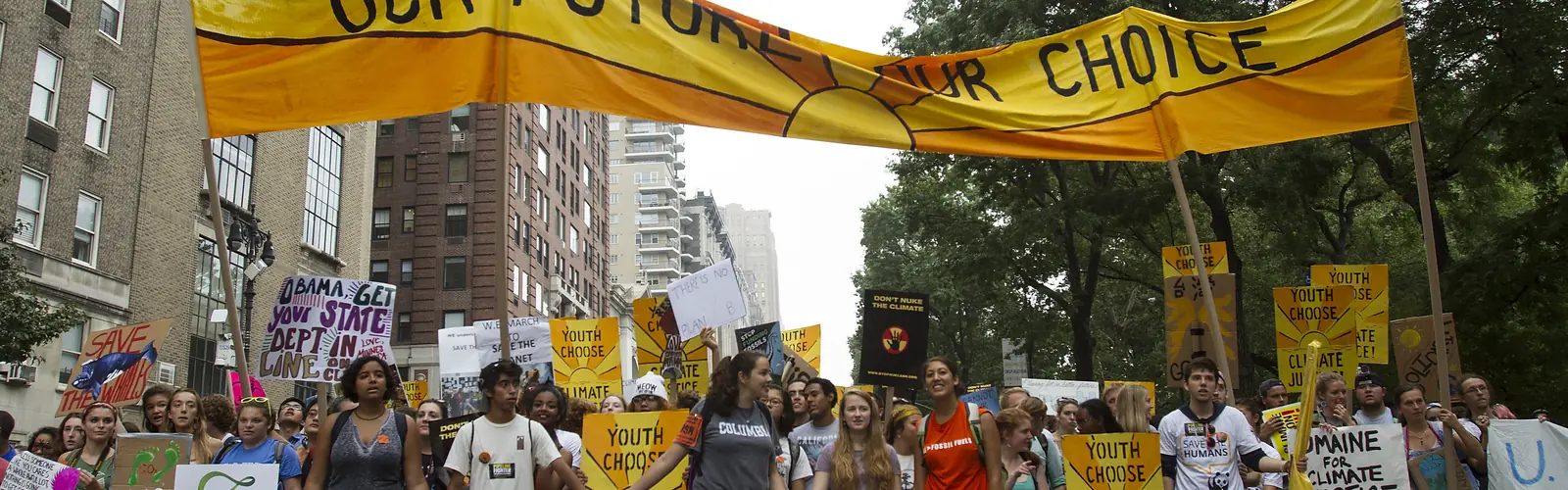
For decades, climate politics has been organized around a mistaken theory of change: frighten the public with catastrophism and apocalyptic forecasts, then demand the sacrifices those forecasts supposedly justify—carbon taxes, consumption limits, and an end to growth. The result has been polarization, not climate mitigation. Decarbonization has happened in places where nuclear, gas, wind, solar, and batteries became cheaper and better than fossil fuel alternatives—often driven by decades of public investment that had little to do with climate. Despite the moral crusading from climate hawks and environmentalists, climate progress is an engineering and economic-development challenge. It advances when clean technologies outcompete dirty ones on cost and performance, when we can actually build things at speed, and when climate goals ride alongside priorities people already hold—cheap energy, good jobs, national security, and prosperity
Start here
Three pieces the team says to read first


Climate Politics work
Research, analysis and everything we have put on the record: comments, testimony, statements, letters and endorsements.
Showing 19–24 of 48
Sort Newest Oldest

Analysis
Environmentalism Is Antithetical to Abundance
From the Death of Environmentalism to the Abundance Movement
· Ted Nordhaus

Analysis
Vermont’s Fossil Fuel Shakedown
The Climate Superfund Act Is Heavy on Discourse, Light on Logic
· Jessica Weinkle

Analysis
Is Climate Really on the Ballot?
Why Projections of US Emissions Under Harris Versus Trump Should Be Taken With A Grain of Salt
· Ted Nordhaus

Analysis
What Nate Silver's Haters Tell Us About Climate Risk
Progressives’ Constructed Ignorance on Polling and Climate
· Alex Trembath


Analysis
Defending Economic Productivity and Capitalism for Climate Adaptation and Mitigation
Contrary to being a liability for adapting to and eventually solving climate change, economic productivity undergirded by private property, markets, and prices - is our primary asset.
· Patrick Brown
19–24 of 48
Who to talk to
Ted Nordhaus
Founder and President Email
Latest: The Original Environmental Economist: RIP Uncle Bill

Alex Trembath
Executive Director Email
Latest: The Faulty Logic at the Heart of Environmentalist Opposition to BAAJA

Seaver Wang
Director, Climate and Energy Email
Latest: The Faulty Logic at the Heart of Environmentalist Opposition to BAAJA

Questions
Why is climate change political?
Climate change is a scientific reality, but responding to it involves political choices about energy, technology, regulation, spending, and economic tradeoffs. Disagreements often concern which solutions to pursue, who should bear the costs, and how to balance decarbonization with affordability, reliability, and growth.
Why are Republicans against climate action?
Republicans are not uniformly opposed to climate action. Many reject policies they believe raise energy costs, restrict fossil fuels, or expand government regulation, while supporting nuclear power, energy innovation, and domestic energy production.
Is the US still in the Paris Agreement?
No. President Trump withdrew the United States from the Paris Agreement for a second time after returning to office in 2025. The withdrawal took effect in January 2026.
Why has climate policy failed?
Climate policy has reduced emissions in some places but has not stopped global emissions growth. Too often, it has focused on restricting fossil fuels rather than making clean alternatives cheap and abundant. Successful decarbonization requires innovation, infrastructure, nuclear power, and economic development.