


Report
Nuclear
Nuclear Notes
By subscribing you agree to Substack’s Terms of Use, Privacy Policy and Information collection notice.
Our position
Nuclear energy can deliver abundant, reliable, zero-carbon power. But the United States has lost the ability to build it quickly, repeatedly, and at scale. Now, rising electricity demand, growing public support, bipartisan political backing, and a once-in-a-generation overhaul of commercial nuclear regulation have created an enormous opportunity to deploy new reactors. Building a nuclear-powered world will require financeable projects, a regulator that can license safely, on time, and at scale, a nuclear community willing to move beyond the status quo, and an industry capable of turning today’s momentum into sustained deployment.
Data and tools
See All-
Tool
NRC Rulemaking Tracker
-
Tool
Mapping America's Nuclear Potential
Evaluating Deployment, Investment, and Impact in America's Clean Energy Future
-
Tool
Guide to NRC Application Data Requirements for State Implementers
Start here
Three pieces the team says to read first


Nuclear work
Research, analysis and everything we have put on the record: comments, testimony, statements, letters and endorsements.
Showing 43–48 of 59
Sort Newest Oldest
Statement
NRC’s Open Collaboration with Stakeholders is Key to Satisfying Congressional Mandate
Stakeholders, concerned with the exclusive and iterative development of a new rule for licensing advanced reactors, implore Federal Commissioners to intercede and improve regulatory engagement on modernization efforts.
· Rani Franovich, Steven P. Nesbit
Statement
NRC Needs a Technology-inclusive Reorganization and Stakeholder-inclusive Engagement
Senior Policy Advisor Rani Franovich identifies two opportunities for NRC to successfully modernize its licensing frameworks: (1) reorganize its workforce ; and (2) provide more open, collaborative, efficient and effective engagement with external stakeholders.
· Rani Franovich
Statement
NEW REPORT: Advanced Nuclear Technology Will Provide Critical Climate and Energy Benefits to the Future US Clean Energy System
Bold investments in advanced nuclear energy will further technological innovation, secure US leadership in international nuclear markets, promote high-quality US energy jobs, and support national energy security and electric grid resilience, all while improving environmental health and accelerating US climate action
· Sean Trambley
Statement
Nuclear Regulatory Commission (NRC) Persists with Higher than Necessary Hurdles for Advanced Reactors
Joint letter from the American Nuclear Society and Breakthrough Institute urges NRC to correct security rule language that perpetuates regulatory overreach
· Sean Trambley
Statement
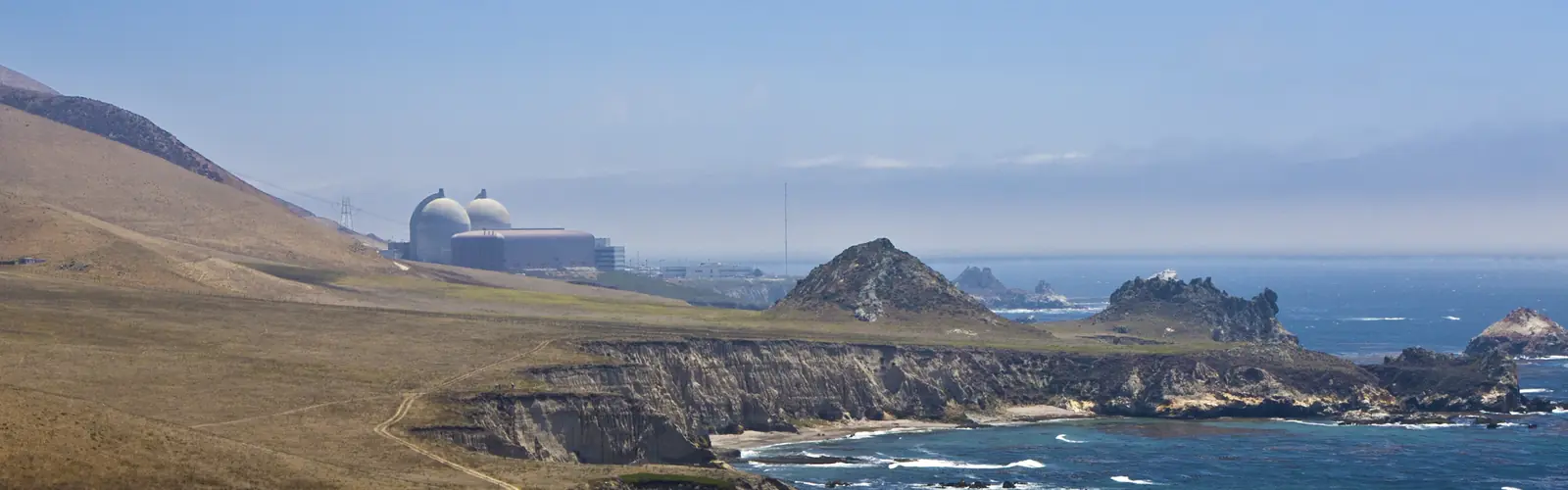
By Keeping Diablo Canyon Open, CA Would Maintain State’s Largest Source of Clean Energy
Gov. Newsom’s announcement to LA Times Ed Board to reconsider decision to shut down the plant is a major step toward meeting the state’s climate and energy goals
· Sean Trambley
Statement
Saving Palisades Nuclear Power Plant To Secure Michigan’s Clean Energy Future
New analysis shows that shutting down Palisades nuclear power plant would cost Michigan more clean power than almost all its wind turbines produce combined
· Sean Trambley
43–48 of 59
Who to talk to
Adam Stein
Director, Nuclear Energy Innovation Email
Latest: NRC Issues Construction Permit for X-energy's Advanced Reactor Project in Texas


Spencer Toohill
Chief of Staff for Nuclear Energy Innovation Email
Latest: Making Practicability the Standard for Uranium Groundwater Restoration

Questions
Should we just build as many large reactors as possible?
Where large reactors make sense, we should build them. But the future nuclear fleet will likely include a mix of large reactors, small reactors, and advanced designs suited to different customers, sites, and markets.
Do we have a solution to deal with nuclear waste?
Yes. Spent nuclear fuel can be stored safely today, and deep geologic disposal is a well-understood long-term solution. Several countries recycle spent fuel. The U.S. problem is primarily one of policy and implementation, not a lack of technical options.
Isn’t nuclear too expensive compared with wind and solar?
While the upfront costs of new nuclear generation are higher than wind and solar, nuclear reactors operate for decades, providing continuous baseload power and reducing the long-term system costs and consumer bills.
Is nuclear power safe?
Yes. In fact nuclear energy is the safest energy source. Its record reflects both the rarity of serious accidents and the extraordinarily small health impacts of producing nuclear electricity compared with other major energy sources.